
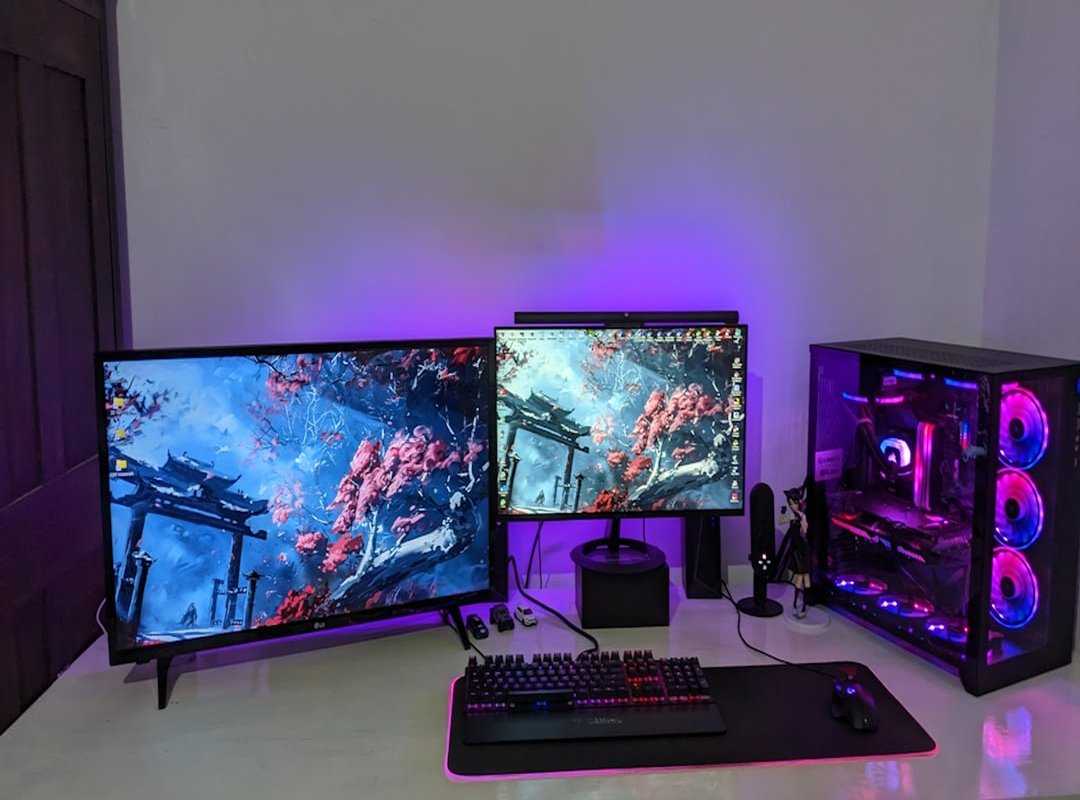
Think building a solid gaming PC has to break the bank? Think again. I’m here to show you how to create a budget gaming setup that doesn’t compromise on performance.
I’ve spent years tinkering and perfecting rigs where each dollar counts, ensuring you get maximum bang for your buck.
This article isn’t just a parts list. It’s a deep dive into crafting a high-performance machine without the high cost. I’ll guide you through strategic choices that turn a modest budget into a gaming powerhouse.
By the end, you’ll have the knowledge and confidence to build a PC that exceeds expectations.
Defining Your Battlefield: What ‘Affordable’ Means in Today’s
What does “affordable” really mean? It’s not a single price tag. It’s a spectrum.
When you’re on the hunt for a budget gaming setup, you have to decide where you fit on that spectrum. It’s tempting to just grab the cheapest parts, but here’s the kicker: it’s about maximizing performance for your dollar.
For those diving into the Ultra-Budget tier (~$500), you’re aiming for that 1080p sweet spot. Games like Valorant and CS:GO will run smoothly. I know, I’ve been there.
Who hasn’t wanted to stretch every dollar? But remember, you’re not just buying entry-level; you’re investing in your experience.
Then there’s the Sweet Spot (~$750), where you start to see more strong performance. It’s where most gamers will find the best balance of cost and capability. But don’t just stop there.
At ~$1000, the 1440p Entry tier lets you experience better graphics and higher frame rates. It’s not just about the specs; it’s about the games you can enjoy. Interested in the must have gaming accessories?
They can raise your setup.
So, what’s your pick? Your choice isn’t just about price. It’s about the experience you crave.
The Power Core: Gaming’s Performance Heartbeat
When it comes to a budget gaming setup, it’s all about the heart and soul: the Graphics Card (GPU) and Processor (CPU). These two dictate over 80% of your gaming performance. Ever wondered why your game lags or struggles?
It’s often because one of these isn’t pulling its weight.
to the GPU first. The GPU is the single most important component for any gaming PC. Why?
Because it handles the heavy lifting in rendering graphics, which is what makes your game look and feel amazing. The more VRAM, the better it performs at higher resolutions like 1080p and 1440p.
For those on a budget, the RX 6600 and RTX 3060 are excellent choices. Both deliver fantastic performance without breaking the bank. But if you’re aiming a little higher, the RTX 4060 is worth a look.
It offers more power, but the price tag steps up too.
Now, let’s talk CPUs. They play a key role in ensuring your GPU doesn’t become a wasted investment. You don’t want a race car engine with bicycle tires, right?
That’s bottlenecking in a nutshell. Most modern, mid-range CPUs handle gaming just fine. They make sure smooth performance and prevent those frustrating game lags.
Consider options like the Ryzen 5 5600 or the Intel i5-12400F. These CPUs offer great value and come with coolers, saving you a bit of cash. You get performance without the hefty price tag.
Every piece works together to deliver an amazing experience.
It’s all about combo here. A good CPU and GPU combo means no wasted potential. Think of it like a well-tuned orchestra.
Need more guidance? You might want to check out this detailed guide on how to build the ultimate budget gaming pc setup. It can be a game-changer if you’re just starting out.
| Component | Budget Tier |
|---|---|
| RX 6600 | Entry |
| RTX 3060 | Mid |
| RTX 4060 | High |
| Ryzen 5 5600 | Entry |
| Intel i5-12400F | Mid |
Pro tip: Always pair components wisely to maximize performance!
Strategic Savings: Cutting Costs Without Crippling Your Rig
Building a budget gaming setup doesn’t mean sacrificing performance. I’ve been there, staring at endless parts lists, wondering what really matters. Let’s cut through the noise.

First, RAM. You might think more is better, but 16GB of DDR4 is the sweet spot right now. Spending extra on faster RGB RAM might look cool, but it does little for gaming performance on a budget.
Trust me, save your cash for something else.
Storage is where you can make a smart move. A 1TB NVMe SSD as your boot drive is a game changer with fast load times. But for mass storage, a secondary SATA SSD or a large HDD is your wallet’s best friend.
Load your games there and watch your savings add up.
Now, motherboards and power supplies. It’s easy to get lost in the motherboard feature jungle. Don’t overspend on options you won’t use.
Stick to essentials. The PSU? Reliability and efficiency are key.
An 80+ Bronze unit is enough for most budget builds. You don’t need a 1000W beast unless you’re planning to power a small town.
The case is often overlooked, but it’s an area ripe for savings. High-airflow, budget-friendly cases exist that focus on function, not flashy aesthetics. After all, who needs a light show if your games run smoothly?
Pro tip: Always check for sales or refurbished parts. They can save you a ton without sacrificing quality.
And while we’re talking gear, check out the headset showdown best for gamers to complete your setup. Sound matters, especially when you’re trying to hear footsteps in your favorite shooter.
In the end, it’s about smart choices. Don’t let flashy marketing sway you. Your budget rig can perform just as well with a bit of strategic planning.
Assembly Point: Battle-Ready Affordable Gaming Rigs
Looking for a budget gaming setup that won’t break the bank? I’ve got you covered. Let’s start with “The Esports Starter” at a cool $500.
This build uses a Ryzen 5 5500 with an RX 6500 XT. Add 16GB DDR4 and a 500GB NVMe, and you’re golden. It’s perfect for 1080p gaming with high FPS in competitive titles.
Think League of Legends or CS:GO. It’s a no-frills, all-thrills configuration.
Next up, “The 1080p All-Rounder” for $750. This setup steps it up: Ryzen 5 5600, RX 6600, 16GB DDR4, and a 1TB NVMe. You can run modern AAA games like Cyberpunk 2077 at 1080p/60fps on high settings.
Impressive, right? Not to mention, it has that extra storage for your growing game library.
“The Budget 1440p Gateway” is the high-fidelity entry point, priced at $1000. With a Core i5-12400F, RTX 3060 12GB, 16GB DDR4, and a 1TB NVMe, it’s designed for QHD gaming. Games like The Witcher 3 look stunning.
You’ll definitely feel the difference in visual quality.
So, what’s your next move? Ready to dive into gaming without maxing out your credit card?
Get in the Game Now
Building a budget gaming setup seemed impossible, right? But it isn’t. Focus on the essentials: CPU and GPU.
You can cut costs elsewhere. I believe you can build a powerhouse without emptying your wallet. So why wait?
Ready to stop dreaming and start gaming? Our pre-configured performance builds are itching to give you that competitive edge. Don’t let the high costs scare you anymore.
Trust in the power of smart planning. It’s time to act. Visit our store now.
Dive into gaming without the hassle. You deserve gear that delivers. Explore, choose, conquer.
Your gaming rig awaits.
 how they got into performance boosting builds and you'll probably get a longer answer than you expected. The short version: Helen started doing it, got genuinely hooked, and at some point realized they had accumulated enough hard-won knowledge that it would be a waste not to share it. So they started writing.
What makes Helen worth reading is that they skips the obvious stuff. Nobody needs another surface-level take on Performance Boosting Builds, Gaming Pulse, Pro Perspectives. What readers actually want is the nuance — the part that only becomes clear after you've made a few mistakes and figured out why. That's the territory Helen operates in. The writing is direct, occasionally blunt, and always built around what's actually true rather than what sounds good in an article. They has little patience for filler, which means they's pieces tend to be denser with real information than the average post on the same subject.
Helen doesn't write to impress anyone. They writes because they has things to say that they genuinely thinks people should hear. That motivation — basic as it sounds — produces something noticeably different from content written for clicks or word count. Readers pick up on it. The comments on Helen's work tend to reflect that.